Project Breakdown
This personal environment project is inspired by The Ghost King – Culain's Apartment concept by Satchit Basu and imagines the workshop of a devoted admirer of Leonardo da Vinci, where invention, craftsmanship, and storytelling come together in a richly detailed cinematic environment.
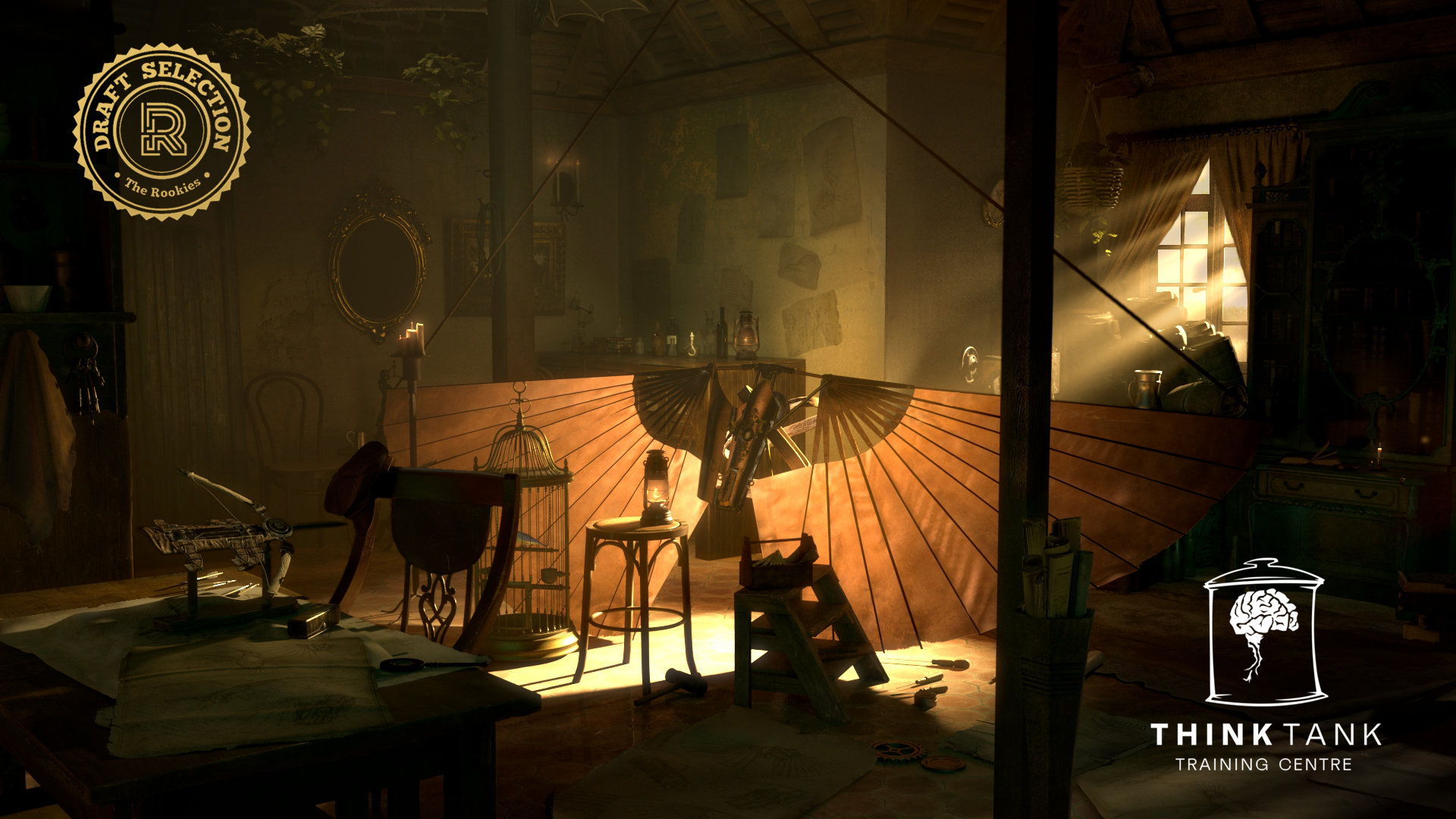
Full Showreel
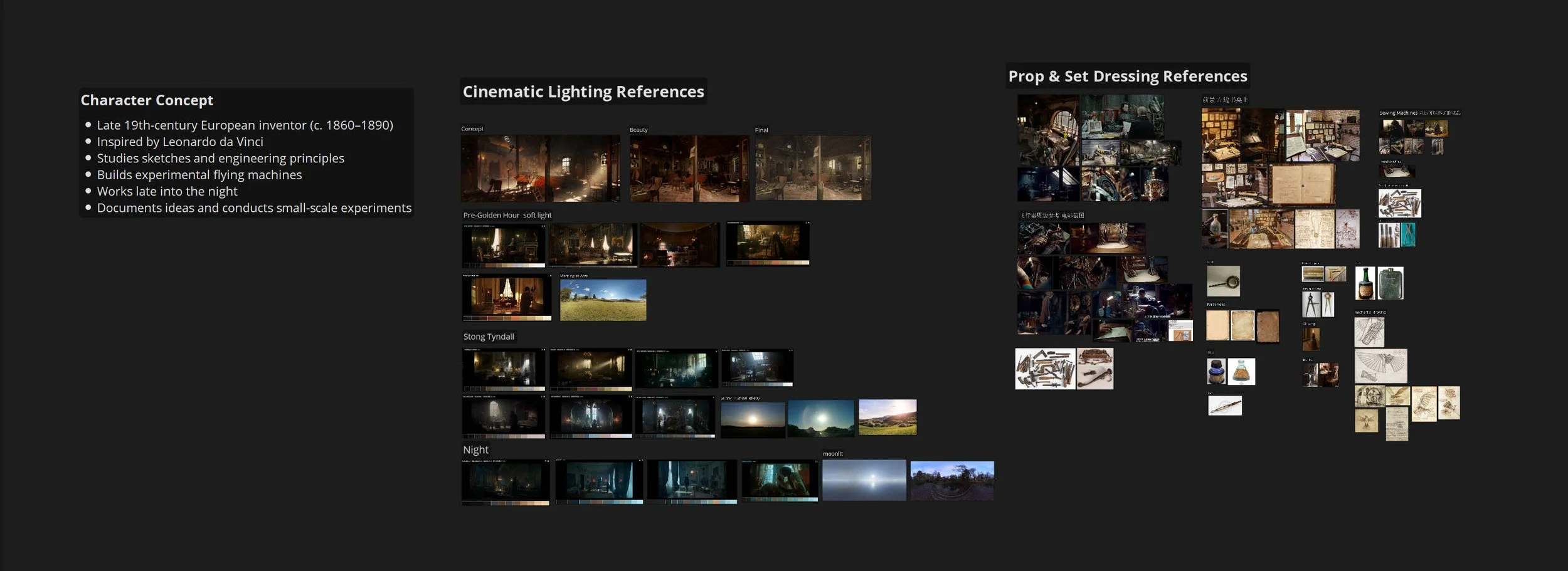
Story Development & Visual Direction
Before production began, I worked closely with my industry mentor to build upon the storytelling established in the original concept. Together, we defined the character who inhabited the space, their personality, their daily routines, and how they would interact with the workshop.
The room was envisioned as the workspace of an inventor inspired by Leonardo da Vinci—a place for studying sketches, building experimental flying machines, and documenting ideas late into the night.
This narrative foundation informed later decisions in set dressing, lighting, composition, and overall visual direction, helping shape a more believable and story-driven environment.
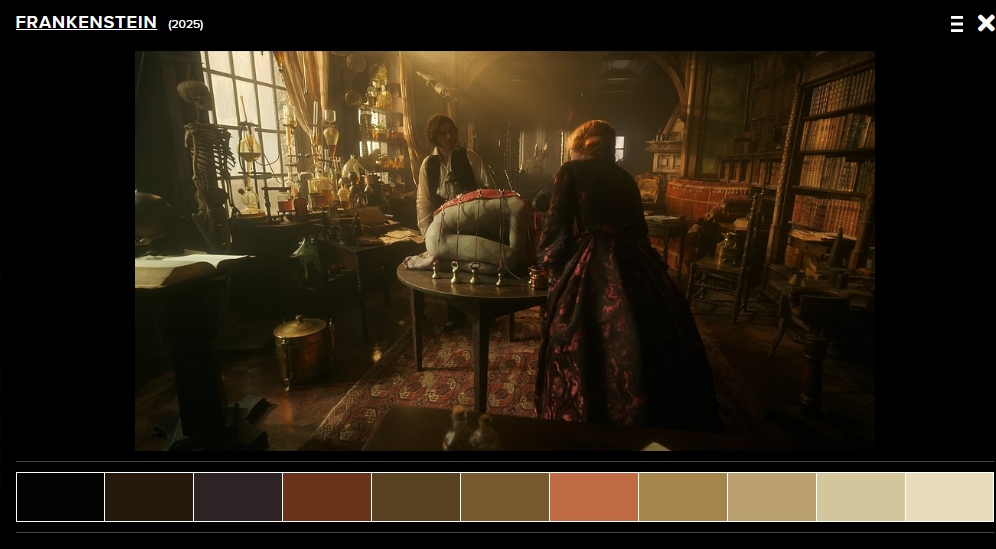
After reviewing a range of cinematic references, we selected the lighting approach from Frankenstein (2025) as the primary visual reference. Its warm directional sunlight, atmospheric depth, and strong use of volumetric lighting closely aligned with the mood, visual language, and storytelling goals of the environment.
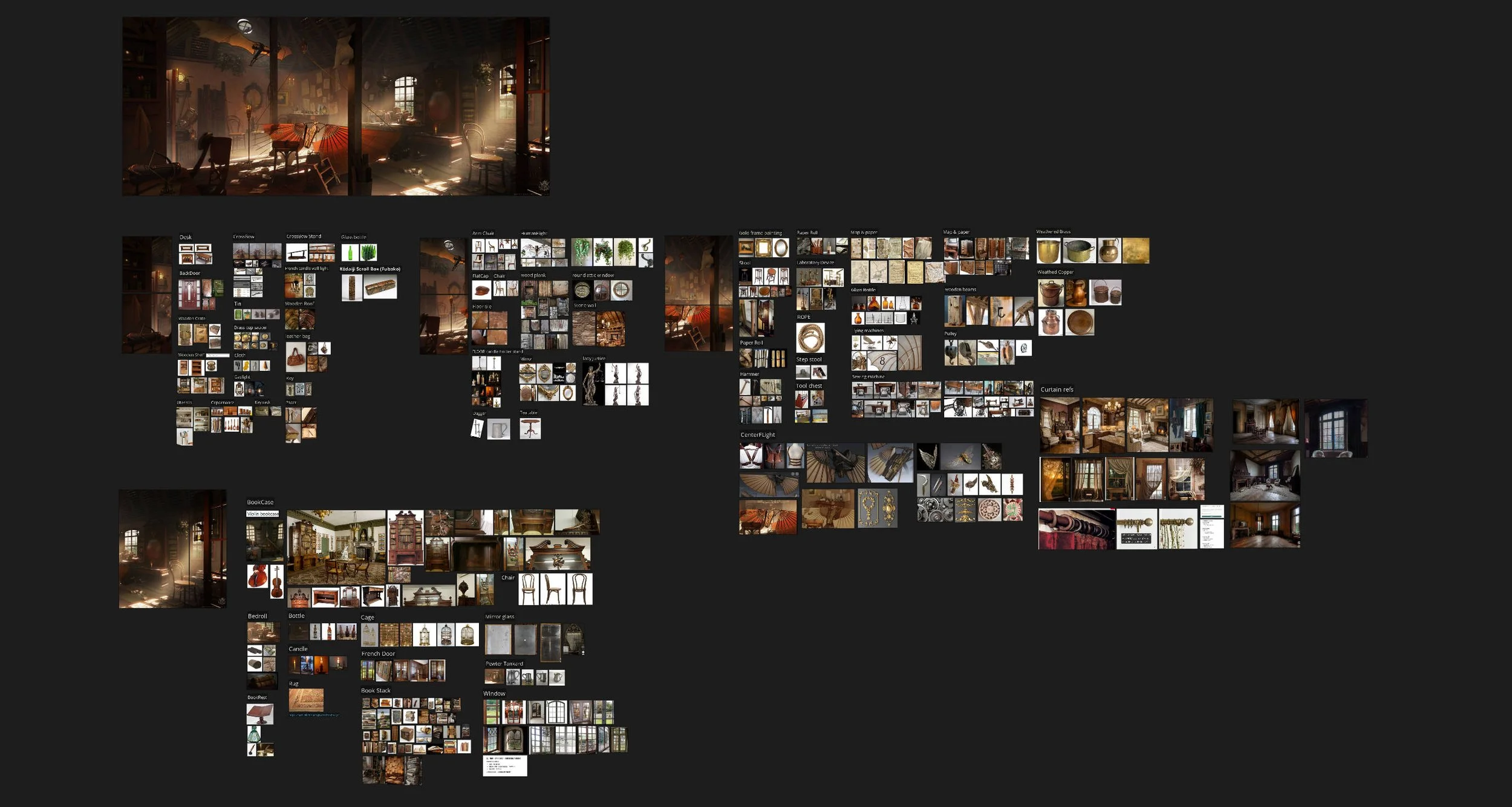
Building this reference collection early on helped establish a clear visual direction for the project and served as a foundation for both modeling and texturing. It also made the production process more efficient, allowing me to make better decisions and maintain a consistent level of realism throughout the environment.
Weekly Progress
Hero Assets
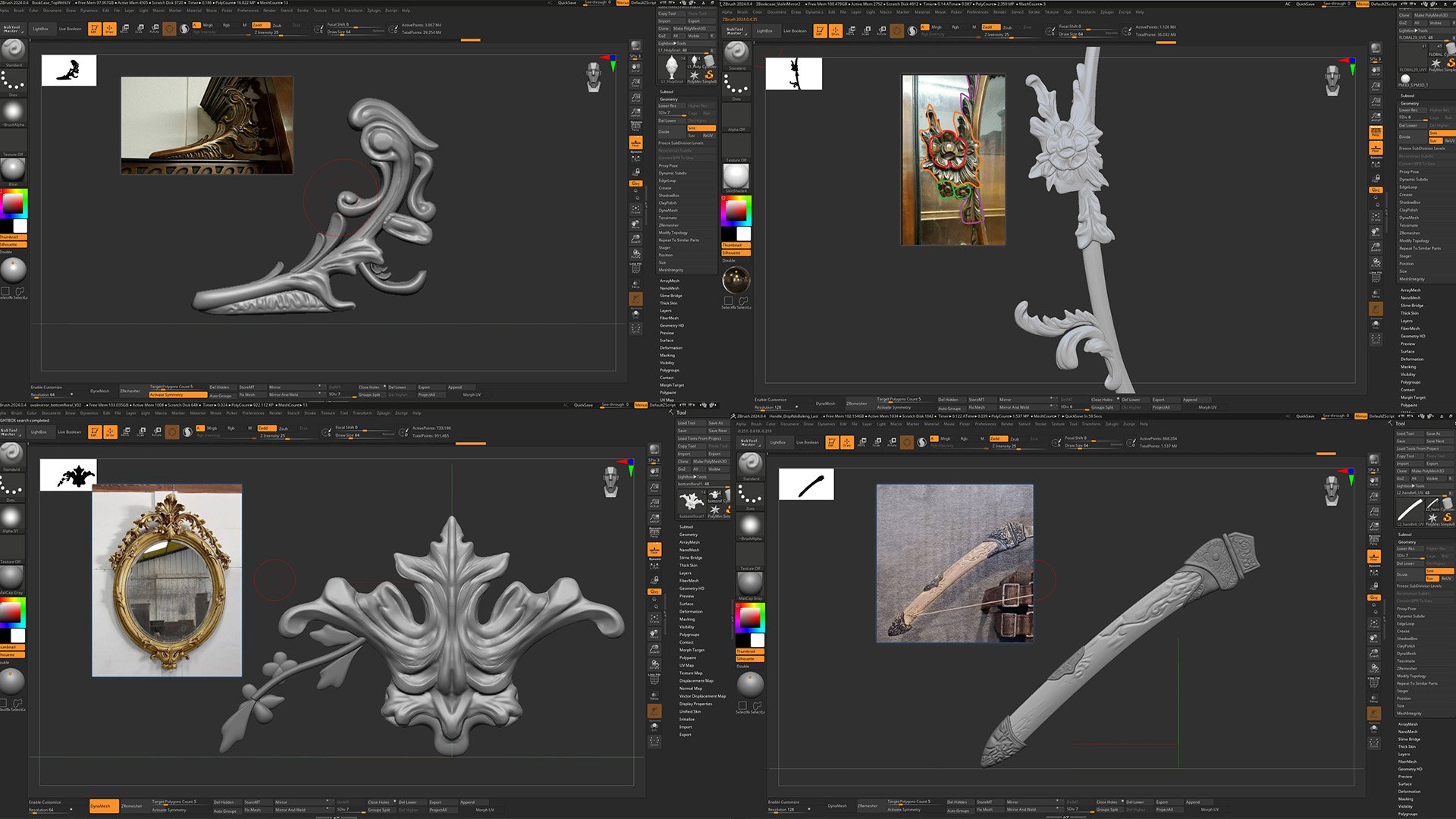
Sculpting & Displacement Workflow
Ornamental details were one of the most challenging aspects of this project. Many of the decorative elements were sculpted in ZBrush and transferred through displacement maps, allowing me to preserve their fine detail while keeping the production scene efficient for rendering.
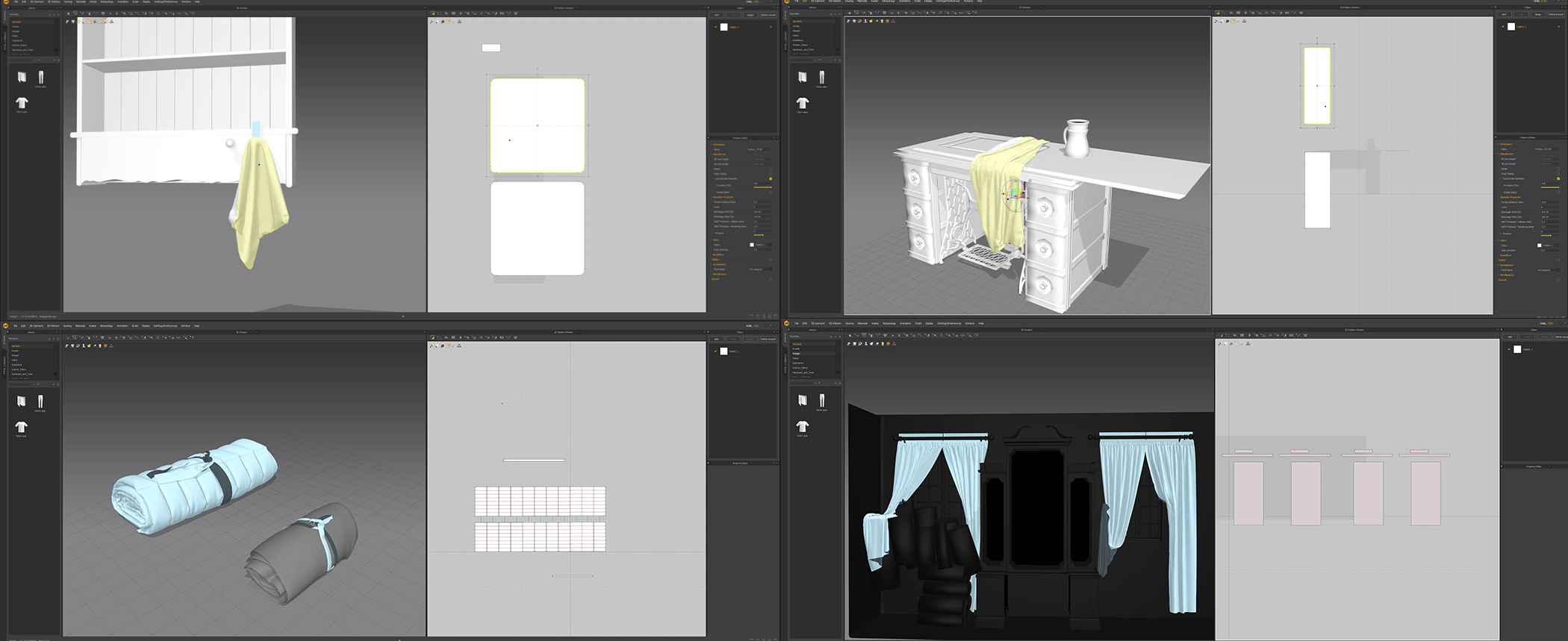
Cloth Simulation Workflow
Several fabric assets within the environment were created using Marvelous Designer, including curtains, hanging cloths, bedrolls, and the flying machine canvas.
The simulation workflow enabled efficient creation of realistic fabric forms and fold patterns, contributing to the realism of the final scene.
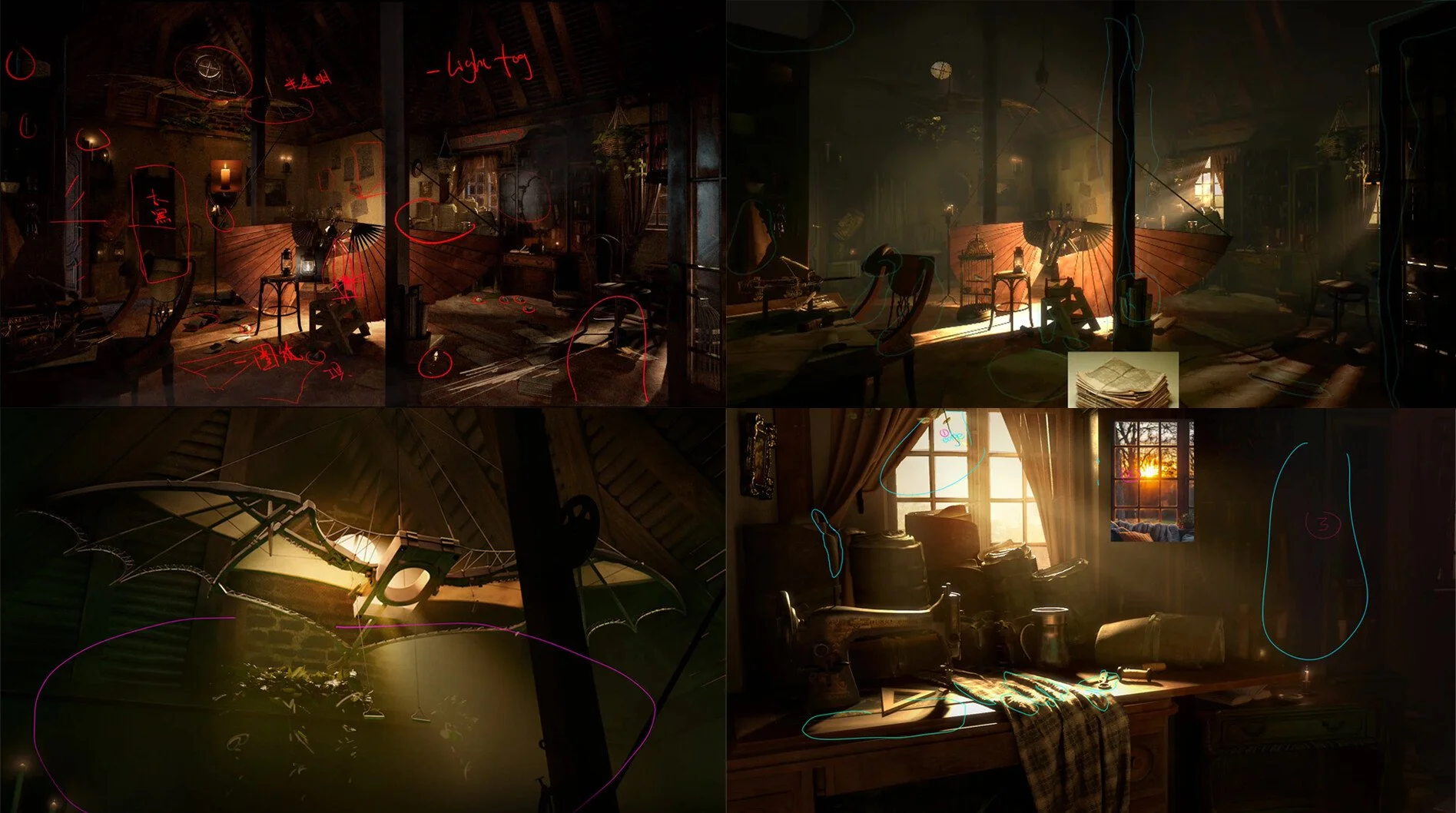
Lighting Development
Working closely with my industry mentor, I refined the lighting through multiple rounds of review. Each round identified areas for improvement, including visual focus, light direction, atmospheric depth, and storytelling clarity. Through continuous iteration, the lighting evolved into a more cohesive and cinematic final image.
The works highlighted demonstrate the progress of key feedback sessions and illustrate how the lighting evolved throughout production.

Shot01 Lighting Evolution

Shot04 Lighting Evolution
2.5D Photorealistic Detail Retouch & Nuke Final Compositing
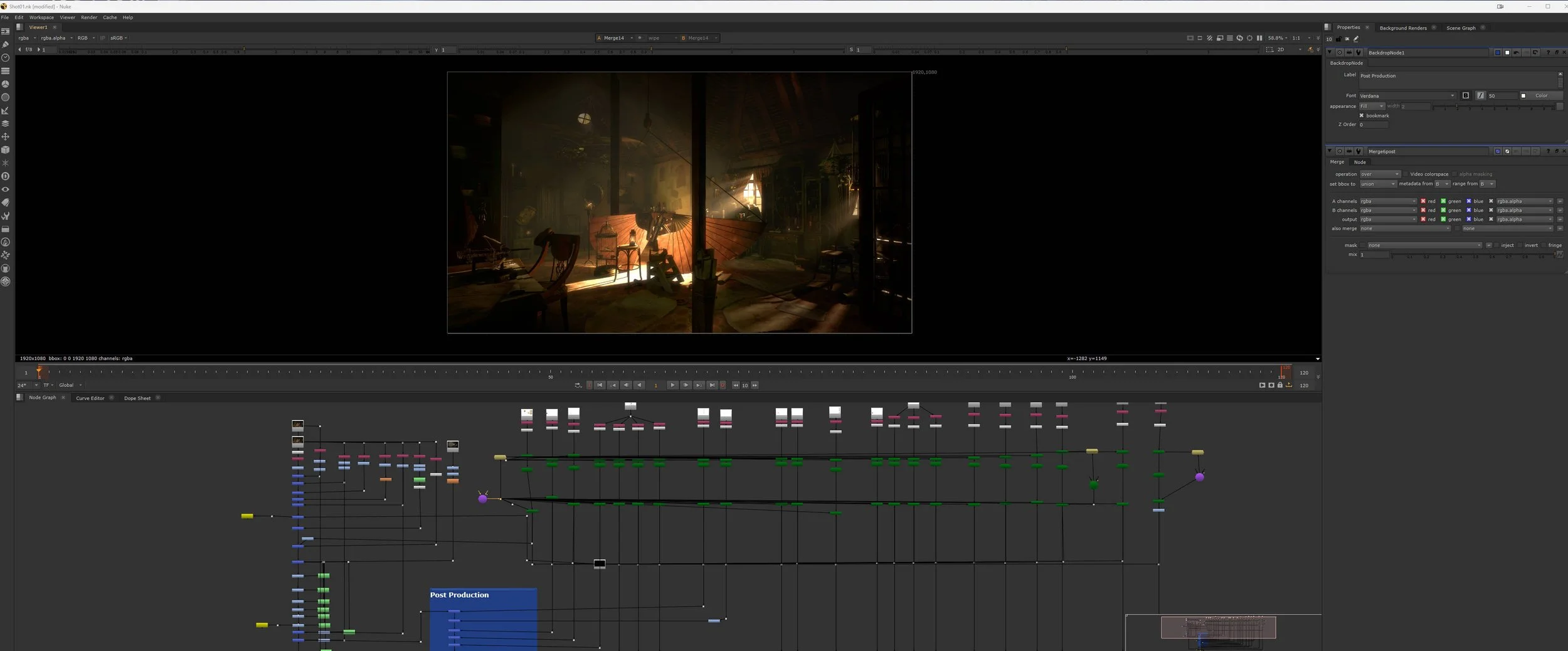
I used Photoshop paint-overs and matte painting techniques to enhance architectural details, surface imperfections, and environmental storytelling elements. Additional wear, subtle variations, and lived-in details were introduced to help the environment feel more natural and believable.
These enhancements also allowed me to address minor rendering artifacts, aliasing, and edge issues that became noticeable during the final review stage. Using Nuke's camera projection workflow, the painted details were projected back onto the geometry and integrated with the tracked camera movement, ensuring consistency throughout the shot.
This process provided a flexible and efficient way to improve realism, enrich visual detail, and strengthen the overall sense of atmosphere without requiring additional 3D re-rendering.
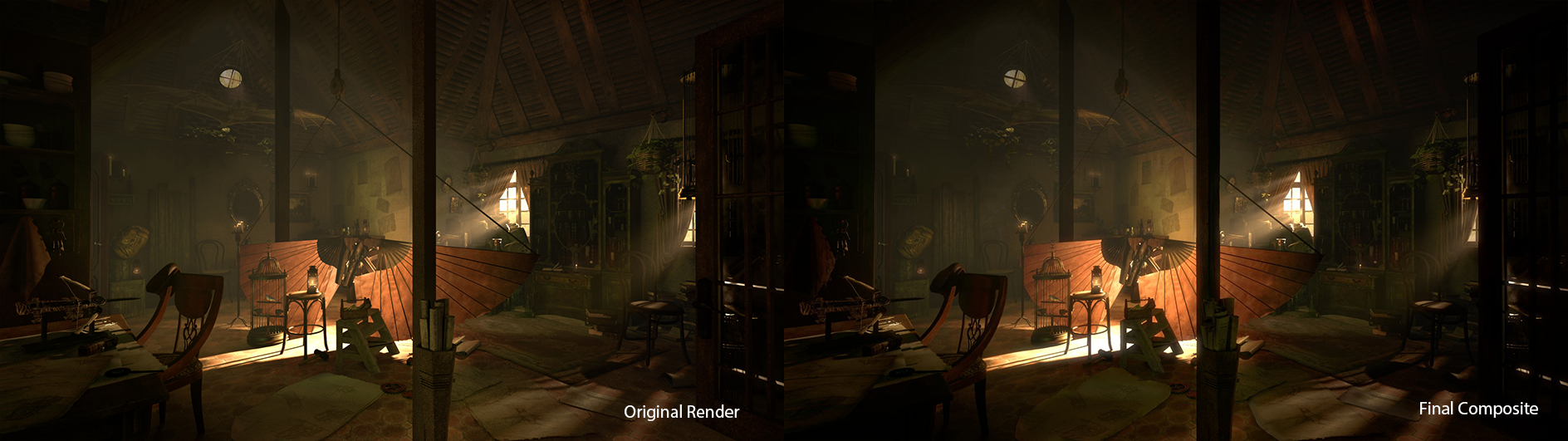
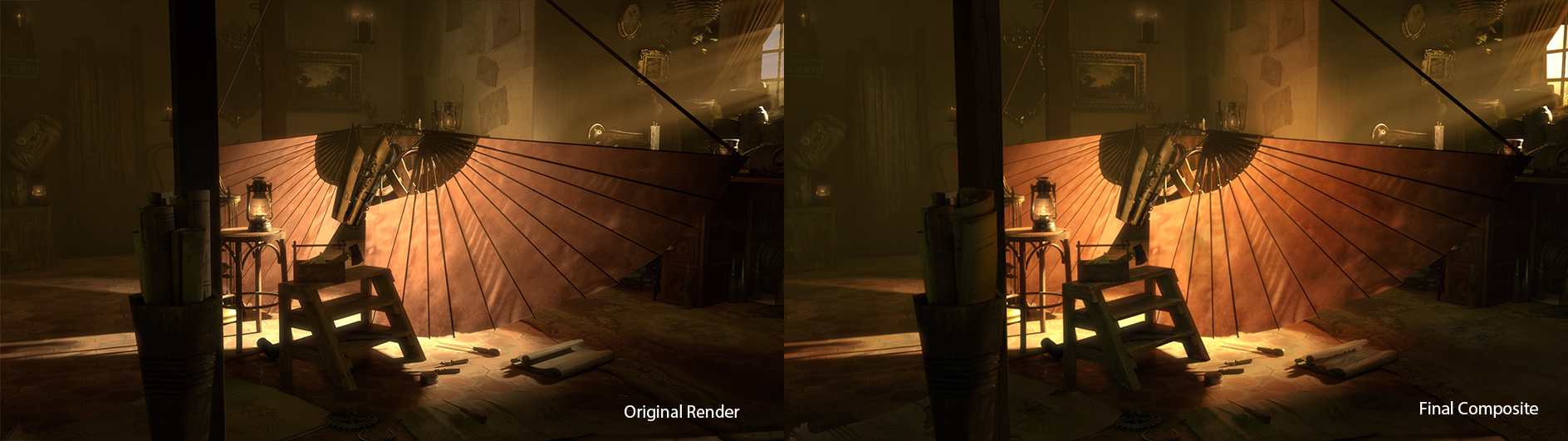
Shot01_2.5D Detail Retouch Comparison
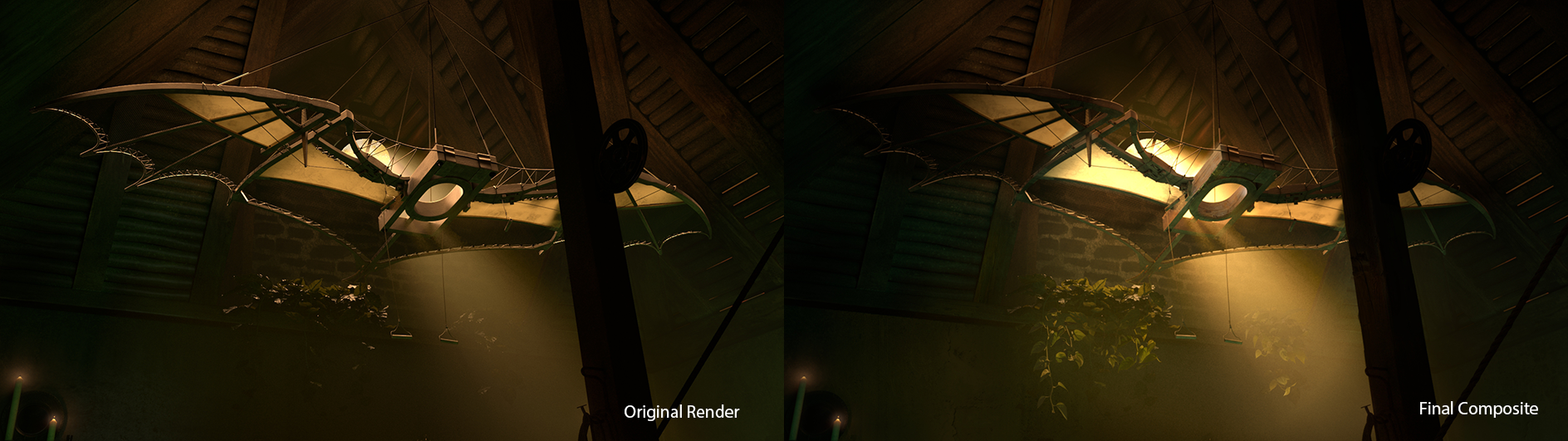
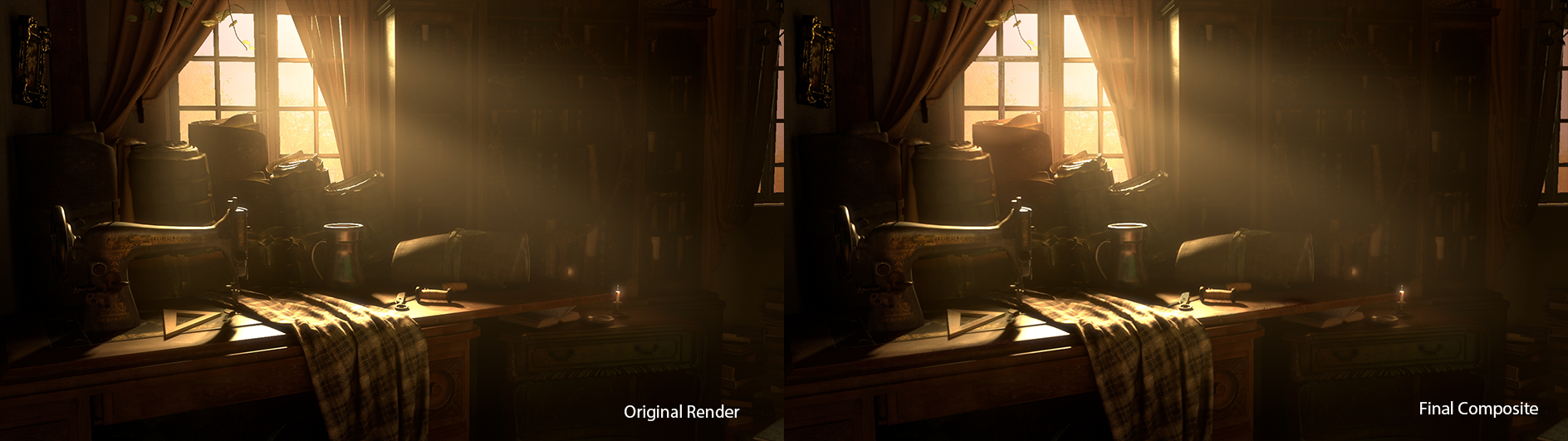
Shot04_2.5D Detail Retouch Comparison
Shot03_2.5D Detail Retouch Comparison
Shot02_2.5D Detail Retouch Comparison
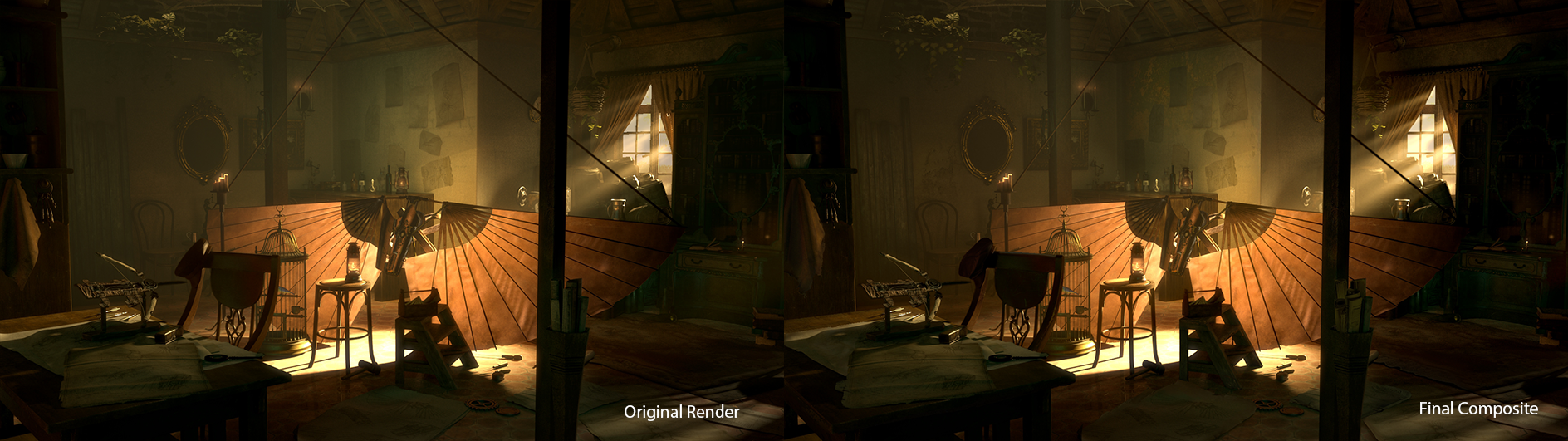
Shot05_2.5D Detail Retouch Comparison